
Now more than ever, we are seeing a decline in the use of Cookies, which could be partly due to 72% of British consumers say they are worried about their personal data when browsing online content. Users of the online world want to reclaim their privacy and take back control over their personal data. However, are Cookies as bad as they seem…?
What’s changing?
In January 2020, Google announced its plans to ‘phase out support for third party Cookies in Chrome browser within two years'. Some internet browsers such as Firefox and Safari have already started to block the usage of third party Cookies which means that by 2022, most of the major browsers will have changed the way that they use customer data. The digital industry relies extensively on Cookie data for personalisation for UX which means we need to prepare and adapt to changes in personalisation solutions. 49% of industry professionals listed Cookie deprecation as their top media challenge in 2021. However, this decision has been made with many benefits behind it.
What is a Cookie?
Cookies are small pieces of code that are placed in your browser when you visit a website. They usually contain at least two pieces of information – a site name and unique user ID. They also capture other details such as website configuration (e.g. language preferences), login details, or products added to a basket.
Cookies are a vital tool marketers and analysts use regularly to track the performance of various websites, campaigns and traffic to certain websites. Cookies allow for targeted, personal ads to users, where the cookie has tracked the users journey on the internet, and are shown ads with similar themes, or products based on previous searches.
Many users dislike the idea of their data being tracked and therefore turn off all Cookies on their device; When actually, Cookies can improve their overall user experience.
Types of Cookies
First-party Cookies understand the behaviour of visitors to a website, remember their preferences and personalise the overall user experience with the brand. First-party Cookies can also be used to remember for example, the contents of your basket on a website, the articles you last read or the progress of a video you are watching. This data can be utilised for personalisation of the website content and also for targeted messaging through paid advertising.
Third Party Cookies come from first-party data, collected by first-party Cookies, and therefore can be shared with or sold to other organisations as third-party data. They are also used by businesses to build an in-depth understanding of consumers and to target them better with advertising, as well as understanding the performance in general of their advertising activities.
Need support with social media management? Youbee Media can help, and Becky’s workshops offer hands-on consultancy advice to go further.
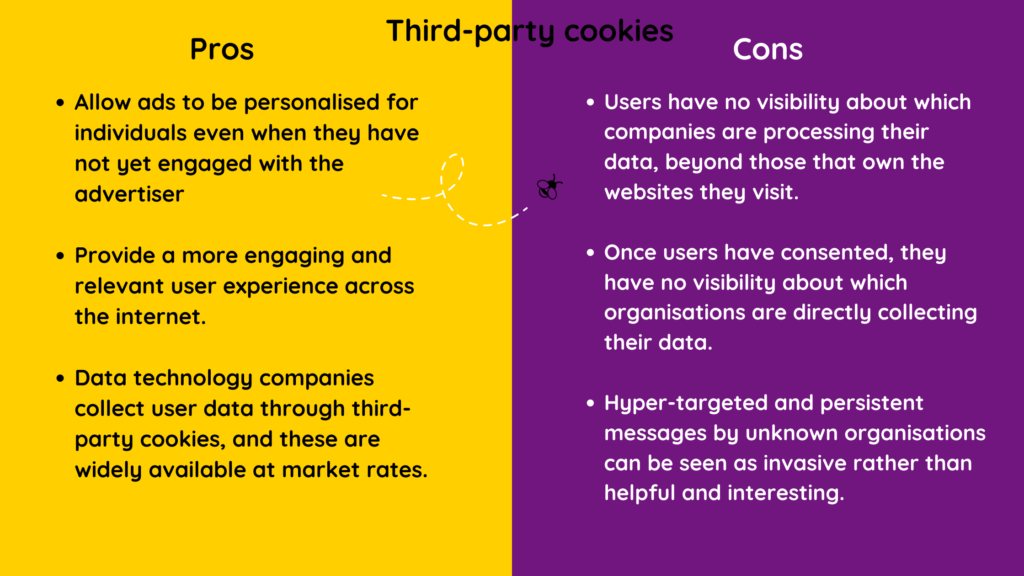
What's next?
In the next two years, advertisers and marketers will have to develop new strategies to target their audience, and rely heavily on other tactics.
This is a process that takes time to achieve effectiveness. But one thing is for sure, marketers will be able to get a more direct and fulfilled understanding of their customers and how to relate and connect with them as well as building a long-term trustworthy relationship
So times are changing, but ‘one person’s problem is another’s opportunity’. There is time to adjust to the changes and the benefits from the increase in consumer trust they will generate.